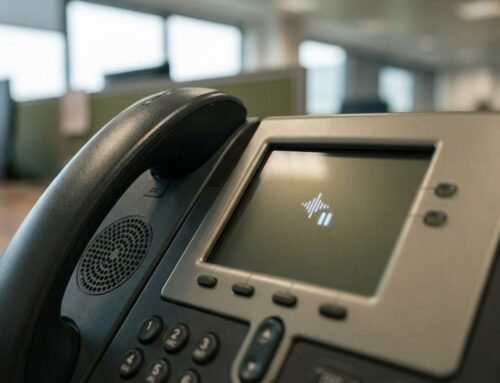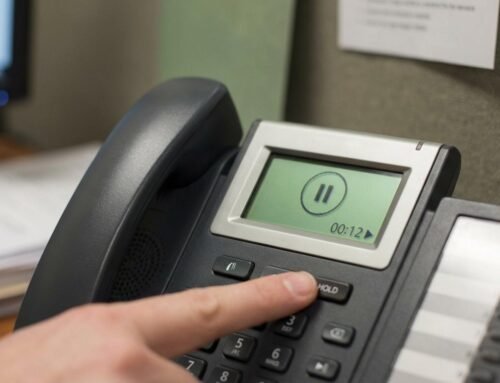


The moment a caller is put on hold, you either keep their trust or spend it. People are busy, they are often calling because something has already gone wrong, and silence can feel like neglect. Even a short stretch of dead air sends a clear message: “No one is minding you.”
Well planned on-hold audio does a simple job: it reassures callers that they are still connected, gives them something useful to listen to, and keeps the wait from feeling longer than it is. Research regularly shows that “occupied” waiting feels shorter than “idle” waiting, and an Irish Times report has cited figures as stark as 20% of callers abandoning within 20 seconds of silence.
Why on-hold messages change whether people hang up
Callers rarely judge you only on the final outcome of the call. They judge the whole experience, including what happens when they are waiting.
Good on-hold messaging helps in three practical ways:
- It confirms progress (even if progress is simply “you are in a queue and we haven’t forgotten you”).
- It reduces uncertainty by setting expectations.
- It makes the time feel less wasted by sharing relevant, easy-to-digest information.
Bad on-hold audio does the opposite. Silence makes people wonder if the line has dropped. A single looped track at a harsh volume becomes irritating quickly. Repetitive, cliché scripts can feel insincere, which annoys callers even more than saying nothing.
The building blocks of an effective on-hold loop
A useful on-hold loop is not a long advert. It is a short cycle of music and voice that repeats cleanly without sounding repetitive.
After you’ve mapped your caller needs, the content usually falls into a few categories:
- Reassurance and orientation: short lines that confirm they are still connected and will be answered.
- Practical guidance: what to have ready (policy number, order reference), what can be done online, where to send documents.
- Service updates: opening hours, seasonal deadlines, changes to processes, planned maintenance, known issues.
- Light promotion: a brief, factual nudge about a service that genuinely helps the caller.
The trick is balance. If every segment is promotional, callers tune out. If everything is apologising, it sounds like you expect to fail.
Scriptwriting best practice (what callers actually want to hear)
Write as if you are speaking to one person who is waiting, not to “valued customers” in the abstract. Short sentences work better on a phone line, and one idea per message avoids overload.
After you decide what to say, run the script through a simple filter: will this help someone in the next 60 seconds? If not, it probably does not belong in the first rotation.
It also helps to avoid stock phrases. Many callers roll their eyes at lines like “your call is important to us” because they hear them everywhere. Replace them with something specific and useful, even if it is simple: “Thanks for holding. If you have an order number handy, it will speed things up when we answer.”
Before you finalise your scripts, watch for these common mistakes:
- Dead air
- Too many ideas in one message
- Clichés over clarity: familiar phrases that add no information
- Sales overload: repeated offers that drown out helpful guidance
- Jargon: internal terms that mean nothing to the caller
- Unrealistic promises: “we’ll be right with you” when queues are regularly long
A professional voiceover helps here because tone is part of meaning. The same words can sound calm and helpful, or cold and scripted, depending on delivery.
Timing and repetition: match your real queue, not an ideal one
On-hold audio must fit the way your phones behave. A business with an average hold time of 15 seconds needs a different approach to a busy service desk that regularly holds callers for 6 minutes.
As a starting point, keep spoken segments around 15 to 30 seconds and space them with music. That gives the caller variety without sounding like a constant stream of announcements.
The table below shows a practical way to plan message spacing based on typical waiting time.
| Typical hold time (most calls) | What callers need most | Suggested voice frequency | Notes |
|---|---|---|---|
| Under 20 seconds | Reassurance only | Optional, very brief | Silence here is risky; a quick “thanks for holding” can prevent hang-ups. |
| 20 seconds to 2 minutes | Orientation and guidance | Every 25 to 40 seconds | Keep messages short and rotate topics. |
| 2 to 5 minutes | Useful info plus light promotion | Every 35 to 60 seconds | Add more music between messages to avoid fatigue. |
| Over 5 minutes | Expectation-setting and alternatives | Every 60 to 90 seconds | Consider callback options and clearer service updates. |
If your system supports it, put the most important message first in the cycle. Many callers will not hear message three or four, because they will have been answered (or will have abandoned) before then.
Music choices and licensing: what Irish businesses need to get right
Music matters, but not in the way some people think. It is not about picking a song you like. It is about choosing audio that survives telephone compression, sits at a comfortable level, and does not irritate after 90 seconds.
A few practical guidelines work well:
- Choose steady, consistent tracks with no sudden volume spikes.
- Avoid busy arrangements that compete with speech.
- Keep the background level low enough that every word is clear.
- Use properly cleared music.
That last point is not optional. Using commercial music without the right permissions can create licensing issues, and it can be surprisingly easy for businesses to miss this when someone uploads a favourite track “just to get something in place”.
OnHold.ie uses royalty-free music designed for telephone on-hold use, which avoids common licensing problems. For many organisations, that single decision removes a whole category of risk and admin.
Sound quality on phone systems (why “studio quality” still needs phone optimisation)
Telephone audio is narrowband or wideband, and it is heavily compressed compared to normal media. That means even a well recorded track can sound harsh if it is not mixed for the real-world phone signal.
A strong production process will account for:
- Clear EQ for speech intelligibility (so consonants do not disappear).
- Controlled dynamics (so nothing jumps out painfully loud).
- Proper loudness consistency across the loop.
- File format and level that suit your specific phone system.
This is where professional recording pays off, especially when you have multiple touchpoints: auto attendant, voicemail, IVR menus, on-hold loop, out-of-hours messages. If each element is recorded differently, callers notice the inconsistency.
OnHold.ie supplies downloadable, telephone-optimised audio files, with professional Irish voiceovers. That combination tends to suit Irish organisations that want a local, natural sound while keeping the overall phone experience consistent.
What to include in your first on-hold refresh (without turning it into a project)
Many businesses delay updating on-hold audio because it feels like a big task. It does not need to be. A short set of messages, recorded well, does the job.
After you’ve identified your most common call reasons, build a small rotation that covers real needs. The content ideas below are a strong starting point:
- Opening hours and peak times
- What to have ready: account number, order reference, Eircode, policy details
- Self-service options: web portal, email address, live chat, FAQs
- Process updates: delivery timelines, returns steps, appointment cancellations
- Service status: known outages, delayed response times, seasonal demand
- A single, calm promotional message that helps the caller choose the right service
Aim for usefulness first. Promotions work best when they sound like guidance, not a pitch.
Make it feel human: voice, tone, and language
The voice on your phones is part of your customer service. A warm, clear delivery lowers tension quickly, especially when a caller is already frustrated.
A few tone choices make a noticeable difference:
- Speak plainly, with everyday wording.
- Keep the pace steady and slightly slower than normal conversation.
- Acknowledge the wait without over-apologising.
- Avoid “corporate speak” that sounds copied and pasted.
For Irish audiences, a professional Irish voice often lands well because it feels familiar and straightforward. It also avoids the “generic call centre” feel that can come from unsuitable accents or synthetic voices that do not match your brand.
How OnHold.ie typically approaches on-hold best practice
A good on-hold provider should make the process easy: gather key points, shape them into short scripts, record with a consistent voice, mix with cleared music, and deliver files that work on your phone system.
OnHold.ie focuses on professional Irish voiceovers, royalty-free music with no IMRO or PRS fees, and a pay-once model with no contracts or annual licences. For many organisations, that combination keeps procurement simple while still producing polished audio.
It also supports the wider set of phone prompts businesses often forget about until they cause friction: IVR menus, welcome greetings, voicemail messages, out-of-hours announcements, and emergency updates. When those are recorded in the same style as the on-hold loop, callers get a smoother, more confident experience from the first second of the call.
A practical way to review your current on-hold audio this week
Listen to your on-hold experience end-to-end from a mobile, not your desk phone. Time how long it takes before you hear a voice, check whether the volume jumps, and note anything that sounds dated.
Then ask two simple questions: does this audio help the caller, and does it sound like your organisation?
If the answer is “not really”, a small refresh with clear scripts, professional voice, and properly licensed music is often all it takes to reduce hang-ups and make waiting feel more tolerable.